
All blogs
Every full length (longer than 60 seconds) video and accompanying blog post
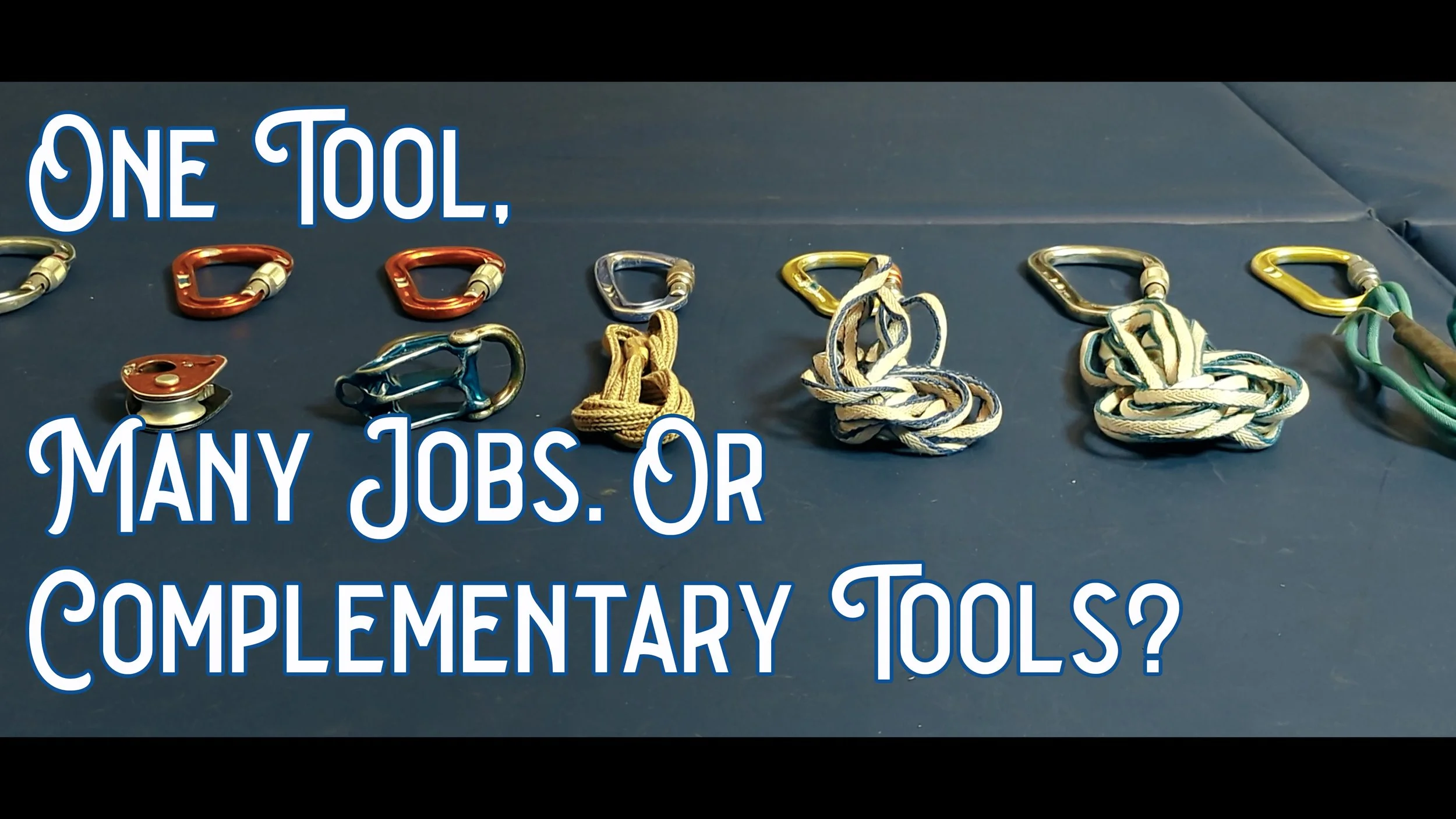
Specialized vs Versatile Gear
There are times on our climbs when we want the exact right tool for the job, squeezing the maximum amount of efficiency out of the gear as applied to the situation for which it was specifically designed. There are times we want a more general piece of gear that can be used in lots of ways even if it isn't ideal for any one particular situation. And then there are times we need to diversify gear for the unknown. Let's get into all three of these strategies.
One System vs Many: The Climbing Risk We're Not Seeing
One of the foundational choices climbers make is how they want to approach systems proficiency. Do we master a few systems, knowing they won't be perfect for every situation but will be good enough, or do we learn many systems knowing the need to practice that broader set could lead to unforced errors when it comes time to apply those systems. There are other tradeoffs, too, of which we should be aware.
Empathy or Stagnation? How We Learn From Climbing Failures
Like many things in life, the extremes often don't serve us or the community around us. When we are confronted with the emotional tension at the heart of climbing and adventure sports accidents, neither ridicule nor disengagement allows us to learn. Empathy is the path forward, as it allows for curiosity which, in turn, allows for learning.
Can You Risk It and Still Last?
In a sport like climbing, and maybe particularly with alpine climbing and mountaineering with their long histories of rebellious individualism, it is somehow still easy to get trapped into others' definitions of success. If we have the courage to carve out our own definition of success, then maybe we can escape the potential trap of ever-contracting safety margins.

Can Your Climbing Trip Plan Save Your Life?
A trip plan can keep you and your climbing partners on the same page but also can help your loved ones deal with any emergencies that might arise. So, what can we put in our trip plans to ensure we meet these needs?

Should You Link Climbing Pitches Together?
I've linked many a short set of climbing pitches into a longer pitch. But I don't always do it. The idea that having to only set up one belay and therefore one belay transition will speed up our climbing doesn't account for a host or reasons why speed might not be the ultimate consideration. Here are some things I consider before I decide to link two pitches together.

Getting Ready for a Big Climbing Adventure? Don't Skip This Training!
When getting ready for a big climb, we work on cardio fitness, we work on strength, we work on technique. But, if the climbing is really pushing our comfort zone, are we going to be able to get into and out of our systems when we are exhausted and stressed? Does practicing systems play a role in training? New climbers and those going on expedition often will, but is there room for say-to-day upkeep of critical system skills?

How Do You Know Your Multi-Pitch Climbing Partner Is Safe?
My twin boys are new multi-pitch climbing leaders. That means they need to trust each other and I need to trust them, as well. How did I enter them into this new climbing discipline? Well, some of the work around exposure to, practice of, and eventual attempts at leading multi-pitch are relevant to any new multi-pitch leader.

Using Close Call Assessments to Make Climbing SAFER
Every May, we make videos on the mental side of climbing and adventure in recognition of National Mental Health Awareness Month. This video talks about close call assessments, discussing what they are, who uses them, how they can make our climbing safer, and walks through a low-effort way we can apply them to our own climbing.

Understanding The Difference Between RISKS and DANGERS in Climbing and Life
Every May, we make videos on the mental side of climbing and adventure in recognition of National Mental Health Awareness Month. This week, we are getting into a question I was asked about how I view risks verses dangers in climbing. Drawing heavily from my upbringing, I get into the importance of differentiating between risks, dangers, probabilities, and consequences and then apply those concepts to help us better mitigate risks.

Balancing Work, Family, And Climbing Is A BIG Challenge
Every May, we make videos on the mental side of climbing and adventure in recognition of National Mental Health Awareness Month. This week, we are going deeper into a subscriber's question about how I balance climbing, video creation, work, family, all of it along with how the goal of balance affects what and when and how I climb.

ULOCKING Your Alpine Climbing Performance Through Empowerment
Every May, we make videos on the mental side of climbing and adventure in recognition of National Mental Health Awareness Month. In this video, we discuss how shared decision making creates empowerment which, in turn, improves team performance and our enjoyment of the mountains.

Revisited: a Short "Movie" of a Family Camping and Climbing Trip
Four years into our channel, the boys and I made a full-circle trip to the location where we filmed our very first video. Like any full-circle event, it prompted some reflection on how far we’ve come as a family, how much the boys have grown and matured, and how I’ve come to live with some personal struggles. We’ve made a short video that celebrates this trip that was four years in the making.

A Walk Together: 9-Year-Old Twins Complete the Tour de Mont Blanc
When the boys were nine years old, we took them to Trek the Tour de Mont Blanc. We’ve spent the last few weeks using that trip as a case study for some expedition planning videos. Well, we also made a very short movie about the trip, just a remembrance for us and maybe a preview for any viewers who are considering going.

Our Climbing, Backpacking, or Trekking Expedition isn't Over Until We Do This Retrospective
No climbing, backpacking, or trekking expedition goes perfectly. We get some things in planning and executing the expedition just right, but we also don't do enough of some things (like, maybe, communication) or too much of others (like, maybe, overtraining). So, we like to enable continuous improvement by doing a facilitated retrospective on a completed expedition. What we learn from everyone's unique perspectives helps leverage strengths and avoid pitfalls when we head out on the next big trip.

Climbing, Backpacking, or Trekking: Expedition Team Dynamics Start with the Prep Work
Trust is key to any team endeavor, and belief in our teammates is just as key to an expedition's success. It doesn't matter if we are climbing, backpacking, or trekking. Multi-day adventures in the outdoors can hinge on our ability to lean on one another. Our family's trek of the Tour de Mont Blanc proved to be one example. The full video describes how the training we put into fitness and shared systems, which we have to do anyway, can be multiplied in the value they bring to expedition teams.

Teaching New Climbers the Climbing Project Mindset
We introduced our kids to "projecting" a climbing route when they first started confronting routes they had considerable difficulty with. While there are many tactics that can help, we began their education by focusing on the climb at three levels of progressive detail and then setting a mindset that helped redefine success criteria based on which level of detail we were focused on for a particular attempt.

Learning to Lead Belay Takes More Than Learning the Mechanics
There is a lot of time and attention spent on climbing well and the climbing mindset, but what about the belayer? Particularly when on lead, belaying a climber can also be stressful, especially for those just starting out. How do we create a safe place to learn in a situation where mistakes aren’t normally acceptable? Here’s how we approached getting our new climbers (our kids) to lead belay.

What is Complexity Rationing and How Can It Be Applied in Climbing?
Every May, we make videos on the mental side of climbing and adventure in recognition of National Mental Health Awareness Month. This video is about how the unknowns increase in complex environments thus increasing our risk. Reducing complexity, not of systems but of the number of times we go into truly highly complex environments, may be one way to reduce our overall risk across a lifetime of climbing

How Climbing Demands Audacity, or Boldness in the Face of the Unknown
Every May, we make videos on the mental side of climbing and adventure in recognition of National Mental Health Awareness Month. In this video, we discuss the role audacity, or self-belief in the face of the unknown, plays in encouraging our climbing experiences and expeditions.