
Short clips
Trailers to full length videos and stand-alone quick tips; everything we make that is under 60 seconds
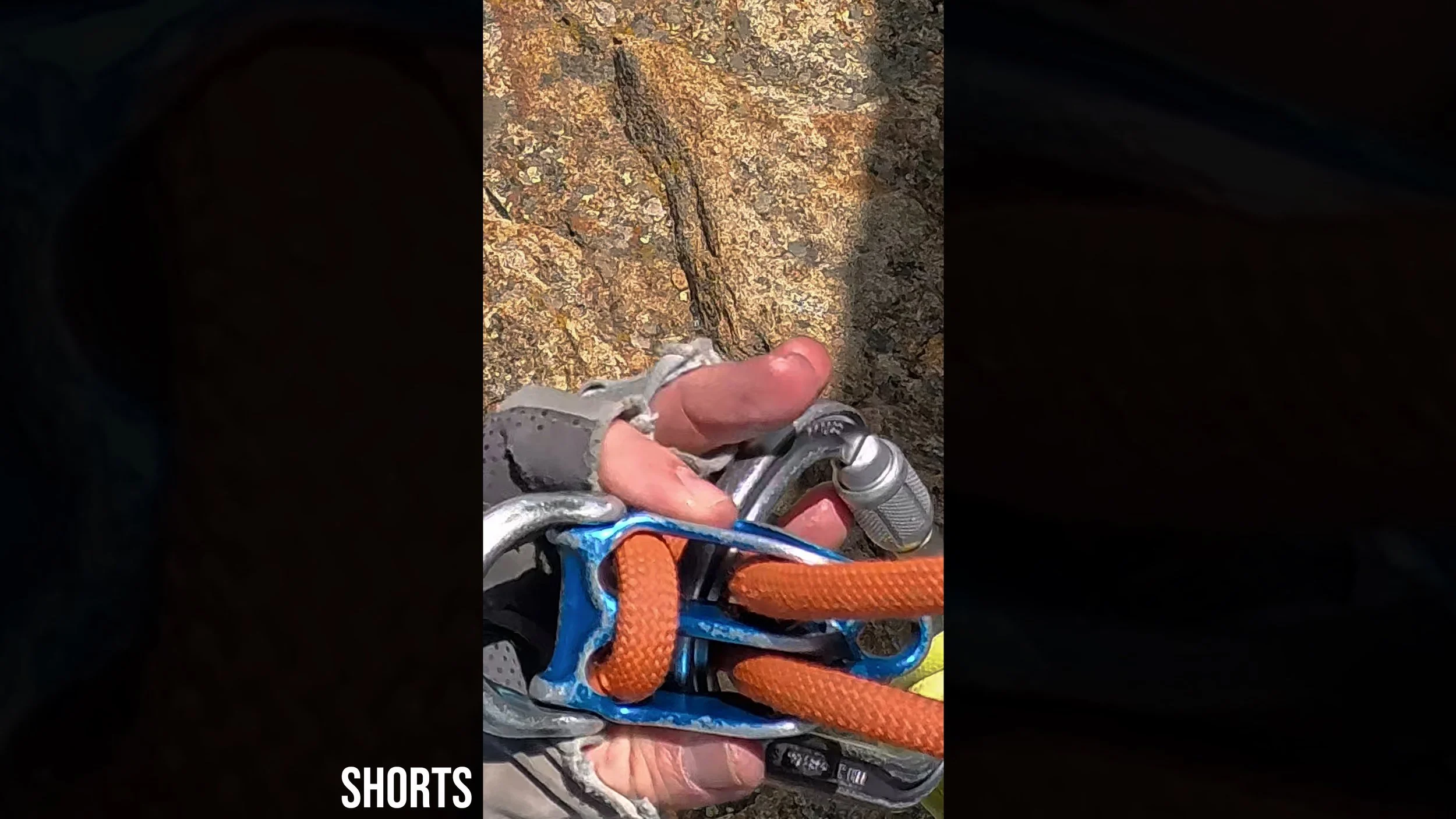
Don't Lose Control: Add Friction to Your Single Strand Rappel
When we are rappelling on a single strand and need to add friction for any myriad reasons, here is one method for doing so on a plaquette device that requires no additional equipment beyond what we are already using for our rappel.

Physics of a Stuck Carabiner Gate
Getting a carabiner jammed shut means we might lose the carabiner and potentially the material in it. There are lots of ways we can end up with a screw gate carabiner that won't unscrew open, but we may be able to solve that problem with a sling and a little physics knowledge.

Don't Get Left Behind: Master the Cow's Tail
When roping together to protect from a crevasse fall, we have to deal with the tradeoff of needing to synchronize our individual rates of travel or we pull and tug on each other increasing fall hazard. We can increase our tolerance for not having to be perfectly synchronized by making a cow's tail connection for our middle climber(s). Here's how.

Stop using this gear! 🛑
Our hard climbing goods get worn. Belay devices are no exception. And one type of wear, like from rappelling, can not only affect that same technique but can impact other techniques, like belaying.

Why You Should Know the Bunny Ears Knot
This is not a typical use case for the bunny ears knot, but using it in such a way can help reduce a major risk that comes with tethering ourselves to an anchor with static material. Now we can easily adjust and take all of the slack out of that thether, avoiding dynamic falls onto a static runner that tests show can actually break those runners.

When a Quickdraw is More than Just a Quickdraw
One of the more ubiquitous pieces of climbing gear is the quickdraw. It’s a handy tool, and there is a lot more we can do with it than just clip our rope to the protection.

Converting a "Z" Haul to a "C on a Z" Haul for More Mechanical Advantage
If we have built a standard “Z” haul system with 3:1 mechanical advantage, we can quickly convert it to a 6:1 system by adding a “C” loop to the “Z” haul. Here’s how to do it along with some of the pros and cons of the system.
Secure Your Belay: Mule Overhand Tie-Off Technique
There are times we want to tie off a belay to keep our climber temporarily safe as we go hands free. Here is one method that may be easier to use if the spine of our belay carabiner is hard to see given the position of our device, the rope, or ourselves. It's one method as a preview to a video with four different methods for tying off a tube-style plaquette device along with how those methods compare across certain scenarios.

This Haul System Efficiency Hack May Harm More Than It Helps
When we build a climbing haul system, we will not be able to escape at least some friction in that system. A major point of friction will be at the progress capture connection, which helps hold the load strand so that we don't accidentally let back out any of the rope we've hauled in. One system I was taught to help reduce friction may actually create more. The video compares nine different systems for efficiency.

Haul Heavy Loads Easier with This 5:1 Trick
Sometimes in the middle of a haul, we need a little extra mechanical advantage to get past a difficult section of that haul. Here’s one way to quickly convert a 3-to-1 system to a 5-to-1 system. Given the number of resets a long haul would require for this setup, it might be best used for only those three feet (about 1 meter) of hauling where we need that extra assistance.

Building a Top Rope Anchor for Multiple Climbs
There's a lot to think about when we are parents with climbing kids or are transitioning from being a climber who is looked after to one who is looking after others. One of the key activities we do in these roles is setting top rope anchors. So, here's one way I make sure the anchor will keep the climbers safe when climbing. The full video deals with the anchor setter's safety, as well.

Bowline Knot Two Ways
I use the bowline knot in lost of circumstances: making anchor points around fixed objects (like trees), making anchors for bolted or trad routes when I want to make sure I can untie the material easily, and even as a rappel extension. Here are two ways I tie the knot based on circumstances.

Tying Off a Tube-Style Belay: a Typical UK Method
There are times we want to tie off a belay to keep our climber temporarily safe as we go hands free. Here is one method, often seen in the UK, as a preview to a video with four different methods for tying off a tube-style plaquette device along with how those methods compare across certain scenarios.

Rappelling Without These Checks? Don't.
Going through both a mental and physical safety check before setting off on a rappel can help mitigate against the risks we face during one of the more accident-prone elements of climbing. Here's how I was taught to do it.

The Rappel Friction Setup Everyone Should Know
Icy climbing ropes. Thin ropes. Extra weight on the rappel. There are multiple reasons why we might want to add additional friction into our rappel (abseil) system. Here is one option for when we are rappelling on a plaquette (tube-style with guide mode option) device. The full video offers two more options.

Alter Our Foot Loop to Make Rope Ascension a Breeze
If we have to ascend our climbing rope, and there are multiple reasons why this might be the case, our foot loop can easily come loose forcing us to waste time and energy continually rewrapping it around our foot. Well, a simple girth hitch can fix that problem

Pick-Off Descent Technique That Saves Lives
One of the standard rescue procedures in a single pitch scenario is the pick off, and it begins with the belayer ascending the belay strand to meet the climber that is on the wall. Once we get to the climber, potentially their size and their injuries might dictate how to position them as we head down. Here is one of three options.

3-to-1 System for Rope Ascent
If we have to ascend our climbing rope, and there are multiple reasons why this might be the case, a clever rope trick that is very simple to do, can greatly increase the efficiency of our ascent.

Load Transfer Saves Lives on the Rope
One of the standard rescue procedures in a single pitch scenario is the pick off, and it begins with the belayer ascending the belay strand to meet the climber that is on the wall. Well, when we have a significantly lighter climber than we have a belayer, that ascension cannot happen. So, if we put in separate, fixed rope, here's how to transfer the climber to this fixed line.

Munter Mule Overhand Knot May Save A Life
One of the standard rescue procedures in a single pitch scenario is the pick off, and it begins with the belayer ascending the belay strand to meet the climber that is on the wall. Well, when we have a significantly lighter climber than we have a belayer, that ascension cannot happen. The full video uses this Munter-mule-overhand knot a couple times within an alternative procedure that frees us from the belay so that we can get help or get another rope in place to get us to our climber in need.